
With SpaceX retiring Transporter missions, Exolaunch is stepping up to fill the void, leading to major customer and investor deals
SpaceX has been flying Transporter missions for only 5 years now, but in 2 years they will cease. Of the 690 Falcon 9 flights, only 21 have been rideshare missions, but for such a large rocket, that means hundreds of satellites have been sent to space for companies spanning the entire industry. Pick a flight proven space company at random, and they’ve probably flown on a transporter mission. University cubesats and commercial satellite demos can’t afford a $70M+ rocket, so instead they split it up among enough of them to cover the costs. The tradeoff is the increased costs of aggregation to SpaceX and the decreased negotiating power of each individual customer. Exolaunch has developed a plan that addresses both; delivering more value to their customers, the rocket providers, and their stakeholders.
For most companies, a service that’s made over a billion dollars in 5 years would be valuable, but for one of the world’s largest companies, it’s a drag on their bigger budget offerings. A majority of Falcon 9 launches carry Starlinks, SpaceX’s communication constellation that generates over $11B every year. They’ve proven that the real business for a rocket company is launching its own satellites, a move that Rocket Lab has emulated with their acquisition of Iridium and AST Spacemobile is looking to replicate with the rumored acquisition of a launch vehicle of their own. For the rest of the spacecraft companies, they’re stuck with a perverse incentive: pay top dollar for the scraps of their biggest competitor. Varda has been paying to fly on SpaceX only for them to develop Starfall, Kepler has done the same though in competition with Starmind, and countless companies developing space domain awareness are up against Stargaze. Even worse, SpaceX has been able to flex their monopolistic dominance in the launch market to increase cost per kilogram by about $2,000 over the past 5 years; with satellite sizes trending towards the 500kg range, that means ~$1M increase in cost per satellite. This combination of pricing pressure and market competition has led the space industry to strive for better options, creating a spree of new rocket companies like Europe’s ISAR and India’s Skyroot. The retirement of Transporter, and more recently Falcon 9, has accelerated this trend by serving as a forcing function to the industry. Exolaunch is taking the lead in responding.
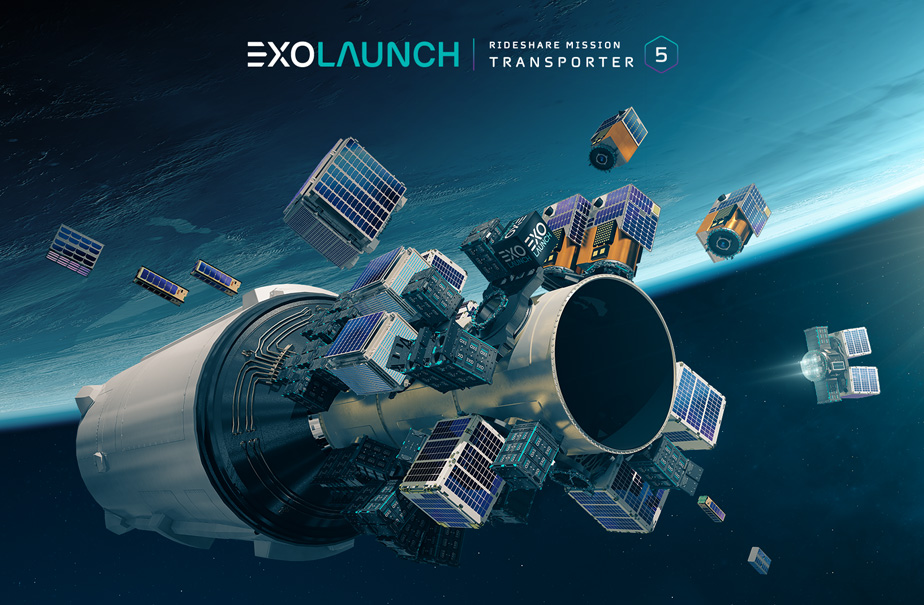
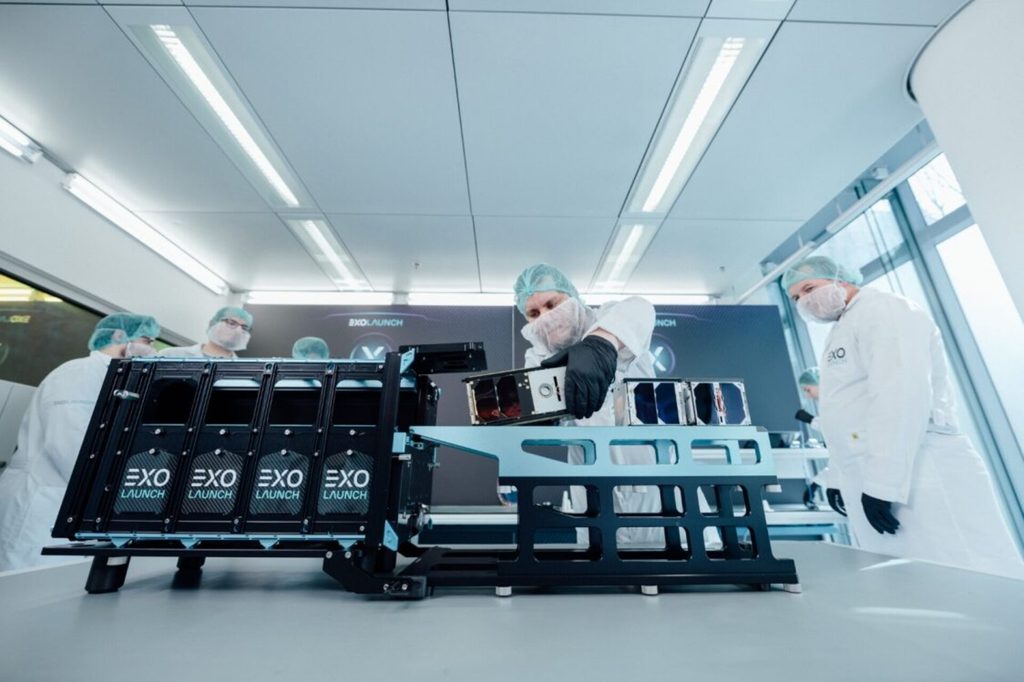
If you’ve watched any Transporter mission, you’ve seen Exolaunch. They’re not the rocket or the satellite, but the integral layer between them. They provide mission management services as well as a vast offering of flight proven interface hardware for every size and form factor of satellite. To date they’ve launched 844 satellites across 49 different missions, and the value of this is immense as CEO Robert Sproles highlights “You can’t buy heritage. You can’t buy the performance, the reliability that only comes through experience and we don’t take that for granted. So we get a lot of inbounds because of this heritage, but we also get a lot of repeat customers because of how we treat them day in and day out, time and time again.“ This combination of heritage hardware and extensive customer network is the key enabler for them to offer launch services without a rocket of their own. Instead they are purchasing whole rockets, and portioning them out to satellite operators. They already have two Falcon 9’s ready and available, as well as purchasing two more rockets just this week from Mitsubishi Heavy Industry’s H3 and another undisclosed supplier. For most, this would be a risky asset to hold on the books for the timescales it takes to manifest and execute a launch, but Robert counters “…because of our scale, because of our customer base already, it’s not very risky. For those vehicles [we’ve bought] we already had anchor customers that said, ‘Yeah, if you had that, I would purchase that.’ So, we already knew that we had de-risked a certain portion of that commercially. So, that made it an easy decision.” This model has been recently validated by other companies such as Maverick providing rideshare on Portal’s Falcon 9 rocket through Motus Via Sol and SEOPs purchasing 5 ISAR launches, but combined they don’t equal the scale that Exolaunch is operating at currently. And they’re only getting started.
To propel them to their ultimate goal of providing a united launch service utilizing every rocket available, they’re leveraging some major capital backing from EQT, a private equity firm increasingly investing in the space industry. Robert explains why their acquisition by EQT makes so much sense: “They see that the infrastructure in space is a major portion of future economies, ground-based and of course space-based economies alike, and they want to partner to help us scale into that. So that’s what this is about. It’s about taking the vision that we already had, and putting some process and some oomph behind that to help us scale into that future vision.” Space has traditionally been funded by venture capital and government funding, there are rare examples of companies being acquired by private equity. This move not only signals a major growth opportunity for Exolaunch, but for the space industry as a whole. Just last week, EQT also invested in The Exploration Company’s $450M round giving them a stake in European human spaceflight. Investing in Exolaunch is a smart move by EQT as they expand into the market in a way that gives them a stake in a core capability enabling all other companies in the ecosystem. Bringing in late stage capital like this allows Exolaunch to bet big on their “Exoverse” of launchers by procuring a larger number of launch vehicles than they could off revenues alone. This provides a benefit to rocket companies by having a consistent large customer, and accelerates the adaptation of spacecraft operators to a post-Transporter world. Together EQT and Exolaunch are not only maturing the industry, but providing additional value to all involved.
For all the dollars associated with these large transactions and private equity acquisitions, it’s reassuring to harken back to the motivating force of space, as Robert puts it “We do this because we’re passionate about the customers and the launch vehicle providers. Everyone here has a passion for space. Everyone sees the vision of expanding our reach into the cosmos. We’re doing this for higher purposes. We’re not doing this, to meet quarterly quotas…We’re doing this to improve humanity.” The retirement of Transporter may have caused a panic in the industry, but Exolaunch’s vast experience has let them be the steady hand that turns it into a reason for growth. By unifying the space industry, they’re able to turn the process of launching a satellite from a herculean effort into a process more akin to scheduling a vacation. Just tell them how many seats, what orbit you want to go to, and when you want to get there, and they provide you with a ticket. If you want to get your satellites to space with ease, and help usher in the future of space access then be sure to check out Exolaunch!
Watch our full interview with Exolaunch CEO Robert Sproles on YouTube!



Leave a Reply