
Space Capital has been investing in space for over a decade, and they plan to shape it for decades to come
2026 has been a massive year for space investments, $6.6B in the first six months alone, spread across dozens of 9 figure rounds, and several IPOs. ICEYE raised a $520M Series F, Impulse raised $500M Series D, and largest of all SpaceX raised $80B in their IPO, making a space business the largest IPO in history. Something those three companies share in common is a major investor: Space Capital. Space Capital is an early stage high-conviction venture capital fund that’s been investing in the space industry for over 15 years. In that time they’ve accrued 70 companies in their portfolio including some of the biggest names in the industry including SpaceX, Rocket Lab, and Planet. Many of their bets have already paid off with 11 IPOs, but they’re not slowing down. Many of their portfolio companies have unlocked space as an infrastructural layer over the past two decades, and now they’re betting on what comes next. This week Space Times had the privilege of hosting Justus Kilian, partner at Space Capital, for a conversation on what they’ve learned from their numerous successes, and where they see the industry going next.

Space Capital follows a thesis based on the business model that developed over the first 50 years of space exploration, as Justus explains, their thesis “is really derived from the evolution of GPS…a tool that was developed for military purposes for precision guided warfare back in the late ’70s…we started to see the rise of location based services, and really just the ubiquity of that service all the way down to a consumer level, and so that playbook we believe is sort of playing out in the other more established industries.” They applied that model to communications and geospatial sectors to great effect, investing in companies like Planet who captures imagery of the entire Earth every day with large fleets of observation satellites and York Space Systems who’ve developed communications satellites for the government then expanded their capability by vertically integrating across the communication stack with acquisitions of their other portfolio companies Atlas Space Operations and ALL.SPACE. A key component to enabling this model to proliferate to other market segments is the decrease in cost for access to space. They’ve achieved this through investing in SpaceX and Rocket Lab who’ve decreased launch costs from tens of thousands of dollars, to thousands of dollars per kilogram, while simultaneously increasing launch cadence from tens of launches to hundreds of launches per year.
This has allowed them to expand their investments into other nascent sectors such as in-orbit manufacturing with their investment in Varda, on-orbit habitation with Vast, and lunar exploration with Lunar Outpost. These sorts of emergent sectors indicate a shift in the sort of infrastructure that space provides, Justus explains that Space Capital believes that “space will start become increasingly important both on Earth as intelligence systems, connectivity systems, but also start to devour parts of our terrestrial industries, potentially some of the more heavily polluting industries or complex industries.” This new infrastructure requires the building of new hardware, and mixed with government demand for space sovereignty and domestic supply chains, there’s been a major shift towards hardware as an investable business. We’ve seen it playing out recently with countless vertical integrations such as new subsystems being developed in-house, and acquisitions of key suppliers. Many companies that have built a strong customer demand for core capabilities are consolidating the market in order to expand into future focused applications. Justus highlights that “a number of those markets have not been reinvented for decades. power and power distribution, launch, satellite manufacturing, critical components, building and scaling of drones, there’s a long list here. And founders are taking that SpaceX playbook, and saying, we can build hardware faster and more iterative, similar to the way we built software, and we’re going to go do that and tighten the cycles on innovation and drive forward performance much faster than we were able to.” One of the sectors that Justus was most excited about is space power, both solar and nuclear, which are excellent examples of this trend playing out in a nascent market much like it did with more traditional sectors. Prior to this year neither sector existed on orbit outside of government projects, but just in the past months Reflect Orbital received regulatory approval to fly their first space solar power satellite, Pulse Space won a $40M USSF contract for space to space power beaming, and NASA opened the door for commercial nuclear power which has already manifested in City Labs flying the first tritium battery, and Zeno Power partnering with Firefly to fly an RTG to the moon. This evolution was made possible by Space Capital’s early investments, and the accompanying success is what’s allowing them to invest in the future they helped create.
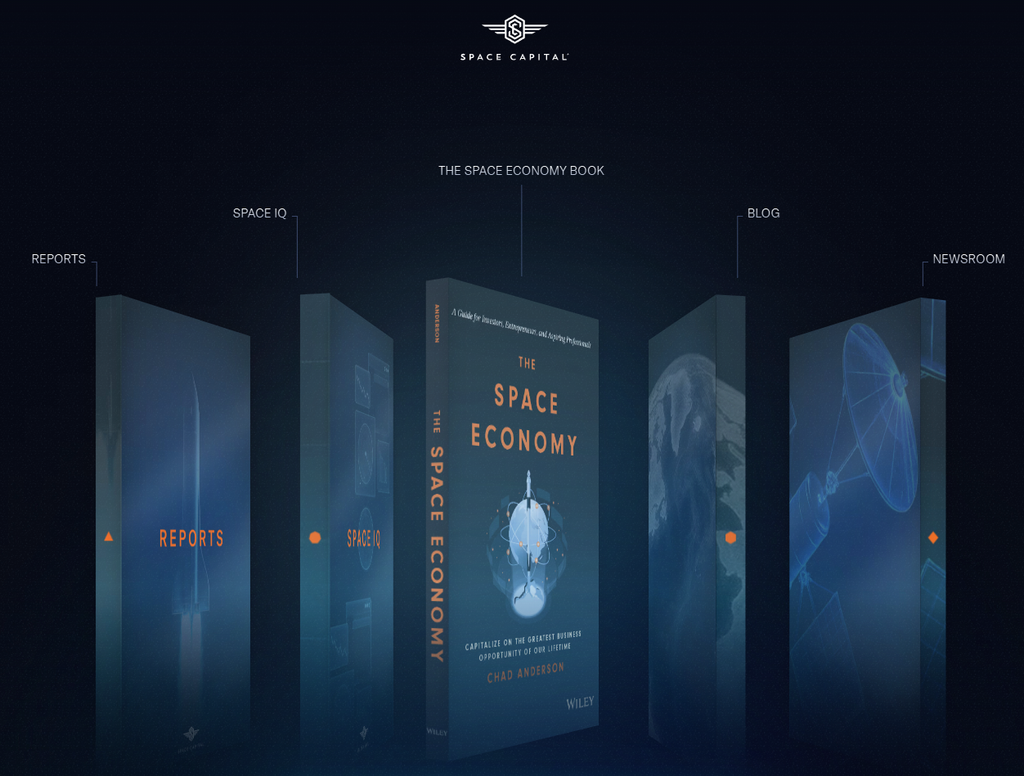
Investing is one way Space Capital has helped the space industry grow, but Justus emphasized that “Even if we didn’t invest, we want to see you successful. We want to see this area and category more vibrant, and have more winners, and so we produce tools to help that.” Space Capital produces content to help founders understand the funding, talent, and leadership landscape; critical levers to grow a space business. Justus is also part of a weekly podcast VHTB where he unpacks these topics with co-hosts from AdAstra Talent Advisors and BUILT. Supporting the broader ecosystem is a sentiment that resonates deeply with Space Times, and something that’s great to see coming from a VC that’s been so heavily involved in the industry. Their “information asymmetry” is a strong advantage that Justus states is key to their success in investing, and to share that through their resources represents the big picture thinking that surely has also benefited their track record. It’s a sentiment that’s reflected in almost every conversation we’ve had with leaders in space, and with the trends we follow, the space industry is an exceedingly collaborative endeavour. In order to succeed as an industry, we have to succeed together.
Space Capital has been involved in many companies that have contributed to the successful growth of space as an industry. They funded launch companies that opened access to space, they’ve funded countless companies that have become infrastructural backbones to terrestrial applications. Now they are investing in the companies that are shaping the “sci-fi” future of the next decades. If you’re a space company looking to propel Earth into the future, then be sure to check out Space Capital!
Watch the full interview on YouTube



Leave a Reply