
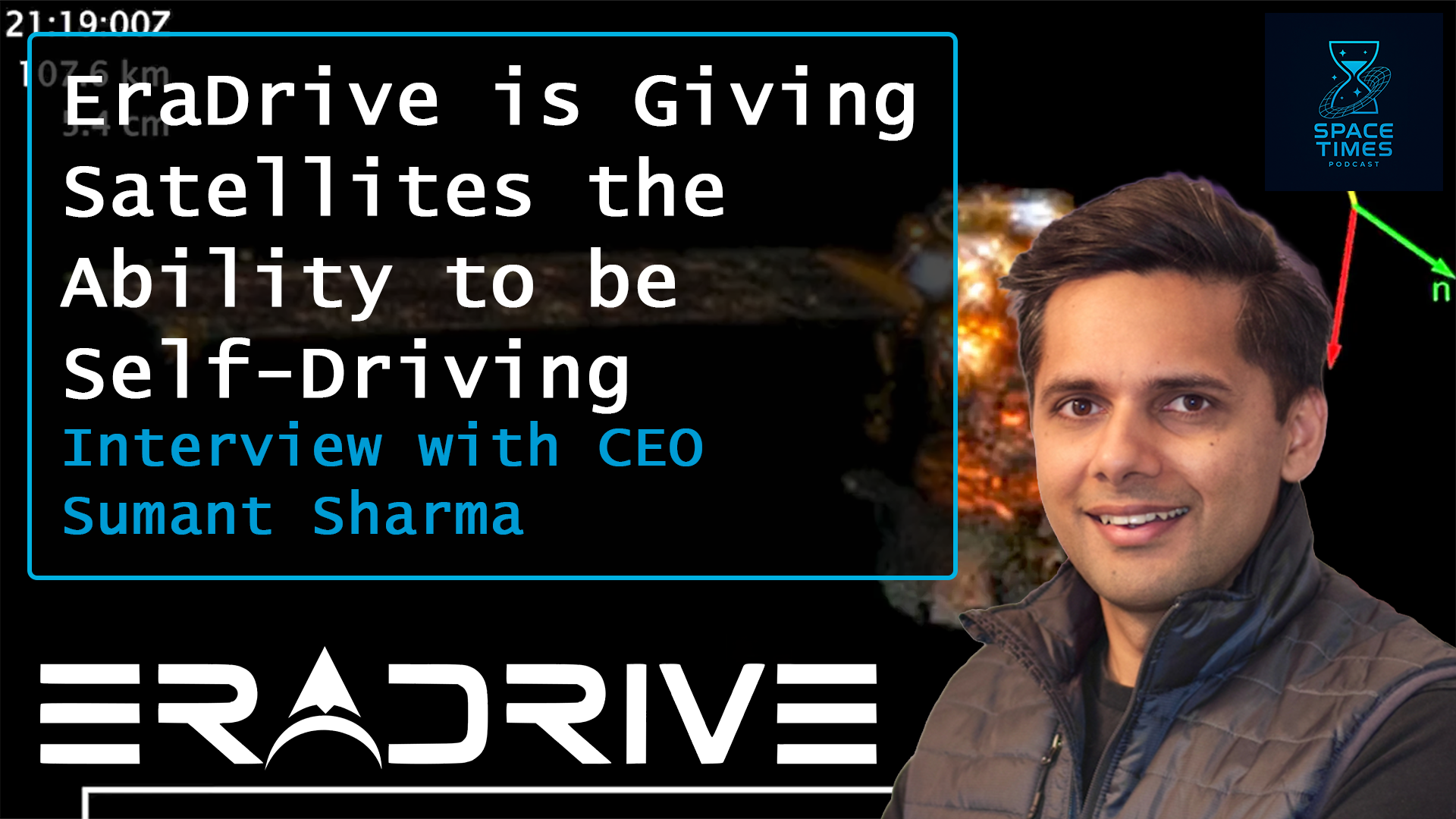
EraDrive is providing software and hardware to spacecraft to enable autonomous operations for collision avoidance, RPO, and more
Spacecraft move at breakneck speeds, kilometers per second, several times faster than a bullet. They can’t, however, change speeds very quickly; partly because the propulsion isn’t that powerful on-orbit, but also because spacecraft operations typically rely on a ground connection somewhere in the loop. As space becomes more crowded this becomes an unsustainable limitation as the number of maneuvers needed to avoid bumping into each other increases, including avoiding the objects that are intentionally trying to “bump” into you. This requires the decision making process to move to space and not rely on ground based resources. It’s a feature that’s already a part of megaconstellations as there’s simply no way to scale an operations team to handle thousands of satellites, but all the smaller satellite operators need this capability as well, without the scale to support it. EraDrive provides this on-orbit autonomous capability to both customer types, effectively turning a satellite into a self-driving spacecraft.
Self-driving may seem simple in space since there are no pedestrians to run into, but instead you have other vehicles flying past you in every direction, any mistake triggers a cascading explosion that can clutter an orbit with debris that other satellites have to dodge. This is a problem that’s grown increasingly problematic as seen with Starlink’s near miss with a Chinese rocket in December 2025, and another Chinese rocket producing a debris field just this month. Space traffic management has become a critical need as traditional systems just can’t keep up with explosive growth, the lack of international cooperation, and the increasing amount of debris that aren’t controllable. To overcome this there needs to be many sensors brought online that can detect and track space objects. It’s an accelerating trend that’s seen billions of dollars spent by the Andromeda Program in the US and thousands of cameras already commissioned for this purpose when SpaceX unveiled Stargaze early this year. It should be clear from that sequence of events that Starlink is not enough to address the problem, as Sumant Sharma, CEO of EraDrive explains “…we work with mega constellations who don’t want to share data with Stargaze, or for geopolitical reasons, they just cannot share data with Stargaze. They would much rather have a firewall system…which is all internal to that mega constellation where EraDrive software and EraDrive hardware enables them to gather that data and for that type of a situation.” This gets at the core value of EraDrive, it allows a satellite to operate entirely independently. It doesn’t matter if they lose contact, or can’t get GPS data, or lose access to collision avoidance services, the spacecraft will carry on.

EraDrive can still provide space situational awareness (SSA) services to a spacecraft by leveraging existing SSA services by integrating it into the system they provide, but they can also leverage a customer’s existing sensors or supply a full hardware solution. This allows them to upgrade an existing deployment of spacecraft, or flex to the design of impending fleets. They can connect multiple systems, or isolate an operator’s network from public access. Having the ability to support both approaches simultaneously means they can provide space traffic management as a product, aggregating their own, and third party, sensor networks to provide a system that monitors all objects in orbit to make sure satellites don’t collide, help rockets avoid satellites, and improve orbital allocation planning. This is of dire need to the increasingly crowded space domain. It’s become especially important when a rocket or satellite is not planned to exist, when an adversary launches without any notification, having EraDrive networked across sensors allows for automated responses, whether it be moving satellites out of the way, or moving a spacecraft to intercept. As the spacecraft moves closer to interception distance, usually the same sensors that worked at a distance, don’t work up close. This is where EraDrive’s secret sauce can bridge an important gap. It’s not helpful to detect a threat, but then not be able to approach to neutralize it. Sumant explains that “…one of the major differentiations for EraDrive is that we don’t look at SSA and RPO as separate markets. They may be separate markets for our competitors, but in fact, our products encompass both of these conventionally separate verticals. For us we look at it as an autonomy problem.”
On that RPO side, being able to grapple a spacecraft is already a challenge for space stations and the satellites that intend to dock with them, and more recently objects that don’t intend to dock with them. The same difficulty is expanding to other spacecraft as dynamic space operations have expanded upon threats from interference by adversarial satellites. Just this week, True Anomaly launched their Jackal to rapidly deploy to a target on-orbit. This is a response to a threat that’s been amplified recently, such as with the Cosmos demo from Russia. In order to perform these operations the spacecraft needs the ability to not only detect, but track, and interact with a target in close proximity. EraDrive’s software is able to handle this sort of operation with their software that leverages near-field imagers to classify any unknown object and guide the satellite through the process of capturing the target. Even if the satellite doesn’t physically couple with its target, it’s still useful to enable any spacecraft to investigate an unknown space object to provide additional information just for improved space situational awareness. This combination of far-field “traditional” space awareness, mixed with a near-field form of space awareness that could be deployed to any satellite with an imager makes for a unique offering for the increasingly important space defense sector. The US government is the obvious customer for such a capability that improves the situational awareness of their space assets, but other governments and commercial operators are being increasingly caught in the crosshairs, and in turn demanding the same capabilities.
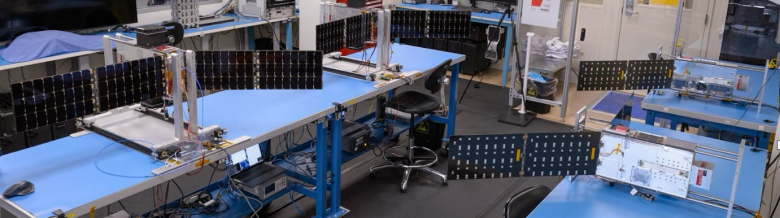
Last week a report came out that GPS jamming was more of a threat than previously thought. It was assumed that the increase in GPS jamming was from ground transmitters in conflict zones such as Ukraine, but analysis showed that Russian GEO satellites were also deploying GPS jamming capabilities to block out signals over much of Europe. New generations of US GPS satellites have been implementing improvements to their systems to resist jamming, and commercial companies such as Xona are developing new systems also intended to address the problem. But trying to overcome jamming within the radiofrequency domain is an arms race that will likely just lead to stronger jammers. A better alternative is to use imagers to provide localization from visual markers, much like Vantor did with their Raptor demonstration in late 2025. Vantor’s system only works with their own imagery satellites though, while EraDrive can provide this alternative position navigation and timing (APNT) through any imager their software is deployed to. Their APNT solution is not only a valuable standalone product, but part of a larger strategy, as Sumant explains “…you realize that the first thing is you figure out where every other adversary is, which is space situation awareness, but once there is a conflict that happens…the first thing that happens is adversaries target nodes of infrastructure on our side…GPS becomes a huge threat vector towards the US [because] every satellite is using GPS.” It is a key feature for EraDrive, as a satellite that can drive on its own is not of much use if it doesn’t know where it is. Combining APNT with the rest of their SSA and RPO suite provides an all-encompassing solution that is resistant to any sort of defensive measures of adversarial targets.
Whether you are looking for better situational awareness to protect your satellite, enabling proximity operations for in-space assembly and manufacturing or defense capabilities, or just trying to make your spacecraft more resilient to an increasingly hostile space environment; EraDrive has a solution for you. If you want to upgrade your system that already includes imagers then EraDrive can provide the software for an upgrade, and if you are designing the future architectures for Earth Moon and beyond then they can provide the hardware to enable next-generation capabilities. Even if dynamic operations are not a key aspect of your satellite, it’s worth exploring autonomous operations in your platform to be prepared for the more crowded and contested environment that you’ll be operating in. If you are a spacecraft operator looking to upgrade, or an engineer interested in developing the self-driving future of space, be sure to check out EraDrive!
Check out the full EraDrive interview on our YouTube!




Leave a Reply