
Open Cosmos adds IoT capability to their high data rate interconnected imagery constellation, ConnectedCosmos, to add value for businesses and governments
Earth Imaging has been going through a rebirth recently, the shift from raw satellite data to actionable insights has caused a fundamental shift in one of the primary space markets. Open Cosmos has been an example of how to use those twists and turns as an accelerant rather than a roadblock. Space Times had the opportunity to speak with Rafel Jorda Siquier, Founder and CEO of Open Cosmos, about how his company is leveraging this shift to expand their imaging offerings by adding low latency connectivity and IoT capabilities through their newly announced ConnectedCosmos constellation.
Open Constellation has been their core product, a constellation of over a hundred imaging satellites operating in a multitude of resolutions and spectral bands, providing high revisit rates to regions relevant to its many business and government partners. Most companies like Vantor and Planet have turned to public markets to fuel their growth. Raising hundreds of millions and acquiring geospatial intelligence businesses to enable their satellites to produce more value from the images they collect. Open Cosmos, instead, generates hundreds of millions in revenue to develop these capabilities on their own; a remarkable inversion of the pattern with only tens of millions in investment. The added benefit from this capital efficiency is that their customers guide the development of capabilities. For instance governments like Greece ordered sovereign satellites years before it was a European criticality, HAMMER satellites for the UK pioneered AI edge processed imagery delivered with low latency through inter-satellite links, and non-earth imaging for IEEC expanded their gaze in every direction. This variety of applications has driven their product to be diverse in design and application.
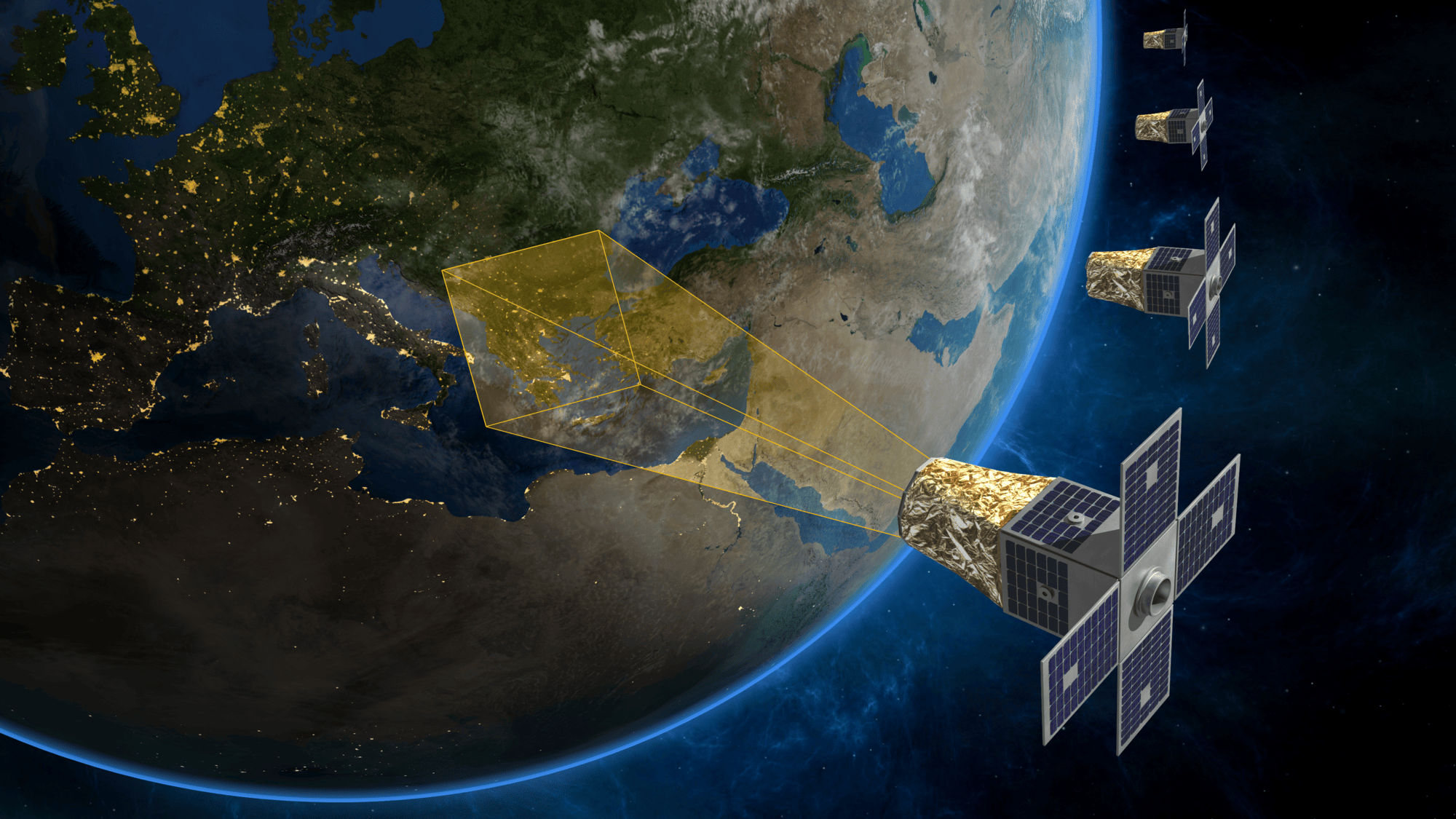
That flexibility is what is enabling them to expand their RF capabilities to provide in-demand features such as rapid transmission of data through optically interlinked satellites. This trend had a debut at the beginning of the year with Kepler’s launch of 10 satellites with hosted imagers from Ororatech and AI payloads from Axiom Space signalling a broad demand for this capability. Within two weeks Open Cosmos launched the first two satellites of their RF layer for ConnectedCosmos, which at first glance, is less. But the ability to connect to their dozen of assets already on-orbit is a neat trick to instantly scale in a way that benefits the entirety of their business. Not only does ConnectedCosmos add value to their imaging constellation as it grows, but it also improves the economies of scale for their own growth and for customers that want to buy satellites. Their factories in Spain, Portugal, United Kingdom, and Greece are running around the clock to scale, and are expanding from producing their traditional microsatellites to multi-kilowatt spacecraft. The increased power will help them squeeze the most throughput out of their ground downlink radios that are using their newly won Ka-band license acquired from Rivada Space late last year.
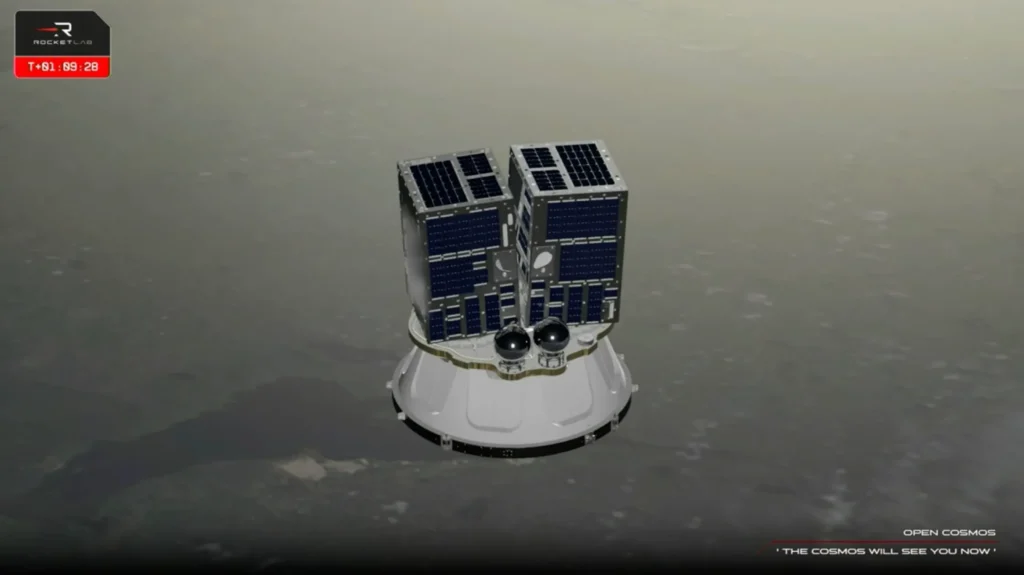
Their business operations are moving at breakneck speed too as they acquired IoT company Connected in January, and today announced they are adding IoT connectivity to their constellation. As Rafel explained, this is a move in direct response to a need from their customers in logistics, mining, and other industrial sectors that want the contextual information added to the data they collect and act upon. With the combination of RF and imagery signals, AI processing at the edge, and an ability to downlink in under 3 minutes, they’ve constructed a constellation that removes the traditional barriers of space for companies that don’t want to worry about the complexities of integrating their operations with satellites. And for government and defense customers that do worry about how an architecture is implemented in space, Open Cosmos is well aligned on every key feature. Space sovereignty is being demanded by all nations, so their ownership of production makes that easy. Signal intelligence is critical for the growing conflicts on Earth, and their growing RF expertise and capabilities offers a multitude of solutions. Space resiliency is key in the increasingly contested domain, and their distributed system that can adapt and expand with satellites that can launch quickly on Rocket Lab’s Electron enables an impressive level of responsivity.
Open Cosmos’s payload diversity, advanced capabilities, and variety of price points truly opens space to a new era of possibilities. ConnectedCosmos will scale to full capacity by 2028, but is open for business today! If you have ideas of how to use IoT signals to trigger satellites to take additional measurements for asset tracking, natural disaster response, remote ground resource connectivity, or any idea that hasn’t been dreamed up yet, then reach out to Open Cosmos.
If you are a space company with exciting news, Space Times would love to talk! Please email contact@spacetimespod.com to discuss how we might provide media coverage for you.








Leave a Reply