

Loft Orbital makes it simple for France to deploy sovereign SAR, and for 15+ companies to run AI on active satellites
“Space is hard” is the axiom of the space industry, but Loft Orbital has made it their business to challenge that. Traditionally space missions take years to execute and millions of dollars to develop before one even has the privilege to spend millions more to deploy. Many companies have pursued commoditized spacecraft to remove this hurdle, but this has led to a multitude of companies serving different classes of missions which leads to even more segmentation that customers have to navigate. Loft overcomes this by taking satellites from multiple companies and unifying them behind a common interface; regardless of the mission profile, a customer is able to have a consistent experience. This not only simplifies the complexities of designing for space, but provides an unprecedented speed to orbit, because as Co-Founder and COO Alex Greenberg explains, Loft has “inventory that is sitting there…[Loft] is the only company in the world that has bus inventory ready to go.” This ease of access is what has allowed them to lead in trending demands across the industry including space sovereignty and AI enabled missions.
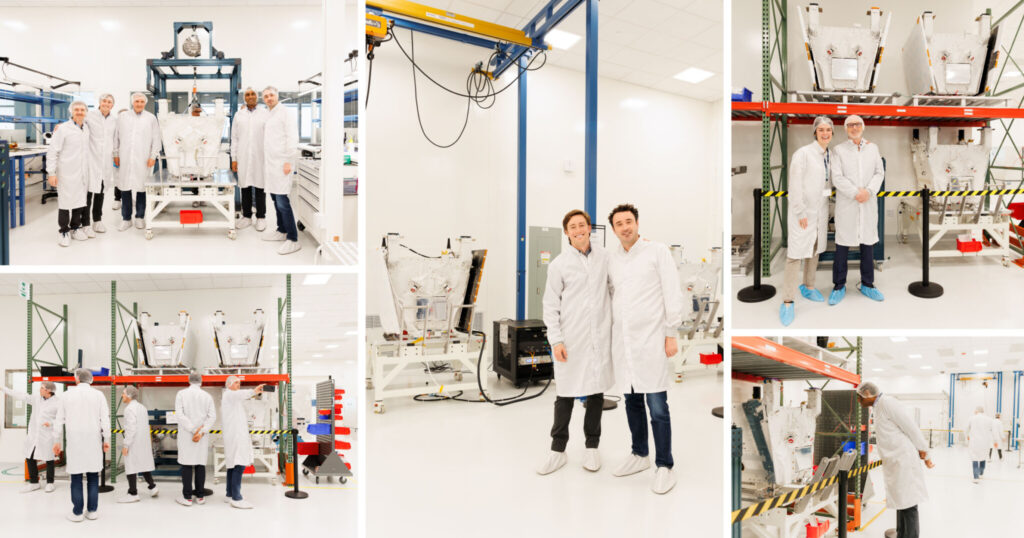
On the space sovereignty front, they’ve set themselves up for success with their international presence: commercial and federal entities in the US, a 100+ workforce in Europe, and a joint venture called Orbitworks in the Middle East. Most recently Loft won a €50M prime contractor role for the first French SAR constellation for DGA and CNES, leveraging their workhorse bus adapted from Airbus’s OneWeb platform already flying payloads for 4 of their satellites on orbit, and 20 more planned for launch this year. Prime contractor roles are rare for companies that aren’t stalwart defense companies as demonstrated by Germany’s $1.9B SAR award to defense contractor Rheinmetall a few months ago. Countries’ demand for control over their space assets are likely to shift this trend though as Alex highlights, there’s been “an explosion in the number of countries that want their own space infrastructure for strategic reasons and it’s more than just a satellite with their flag on it. It is a combination of domestic production of IP that is actually licensed in the country, and developed in country. It’s an ecosystem of suppliers and partners. And Loft’s business strategy actually allows some of our international customers to have that.” Their bus flexibility positions them to capitalize on this need as they already have a US supplier with LeoStella, a European supplier with Airbus, and new options they are working on integrating to support emerging mission needs.
AI in space is another recent trend that is multiplying their missions’ impact with “upwards of 15 customer provided software apps on board” including the recently announced SmartSat customer deploying wildfire detection AI to their YAM-6 satellite. Across these missions Loft has demonstrated the value of adding AI to spacecraft including new mission profiles, improved reactivity of space operations, and reduced data required to downlink to Earth. This has been echoed by growing interest across the industry to deploy these capabilities including CesiumAstro’s acquisition of Vidrovr for ISR, BlackSky’s feature detection, and The Compression Company’s funding to reduce downlinked data. Loft’s early traction in these capabilities has led them to double down by deploying Altair, their own “10 satellite AI enabled multi-sensor constellation…with a really interesting range of imagers and RF payloads…several GPUs on board, an inter satellite data relay, and a software platform for accommodating first and third party AI algorithms to do interesting analysis on board.” The architecture described will build on the benefits of AI as imagers and RF cover a breadth of mission profiles, inter satellite links enable rapid reactivity across the constellation, and a multitude of GPUs will help reduce data volume. This constellation perfectly exemplifies Loft’s strengths across sovereignty and AI since it will be deployed by Orbitworks, and provide a flexible platform for customers to discover and scale new applications for AI.
Loft is building on these wins to deliver new capabilities to new customers. They recently formed their new AI for Space business unit led by Paul Lasserre, former lead of Data and Generative AI Partnerships at Amazon Web Services, to make their satellites as easy to use as traditional, terrestrial, compute platforms. They’ve also been seeing traction in Asia where sovereign SAR capabilities have had similar demand as in Europe, and partnerships across the continents have been increasing including Synspective’s subsidiary in Germany and Iceye’s subsidiary in Japan. Despite their dominance in these trends, Loft remains focused on delivering their simplified space experience for all types of customers: “ if you have a mission you want to fly from a small couple kilogram demo that will fly in a ride share up to a kind of flagship national mission that requires a whole satellite or a fleet of satellites, we want to be top of mind for that.” So if you want to get to space simply and quickly, then be sure to reach out to Loft to get your hardware and/or software on-orbit!
If you are a space company with exciting news, Space Times would love to talk! Please email contact@spacetimespod.comto discuss how we might provide media coverage for you.








Leave a Reply