
Edge Aerospace is upgrading the components critical to the future of in-space computing
In the early days of spaceflight, modern computers didn’t exist. For the Apollo program and NASA Mars missions in the 1960’s they relied on Univac computers connected to hand-wound memory systems called core rope. Though innovation in computing has been rapid since then, it hasn’t fully translated to space. Chips have gotten smaller on Earth, but in space that increases the risk that radiation damages a transistor, potentially inducing a catastrophic failure in your satellite. For that reason, new systems undergo an extensive and expensive process called rad-hardening. It’s stalled development of space computers to this day, relegating the tech to more tried and tested tech from the 90’s and several generations old chips from bespoke manufacturers. As the demand for on-orbit processing increases though, the old ways of qualifying space hardware can’t keep up. GPUs are increasingly being sent to orbit where they’re expected to be able to perform as reliably as they do on Earth, but the threat from vacuum, thermal cycling, and radiation damage remain a constant threat. Edge Aerospace is taking a different approach, developing the hardware for space first, optimizing the technology to not only survive space, but to excel in the harsh environment.
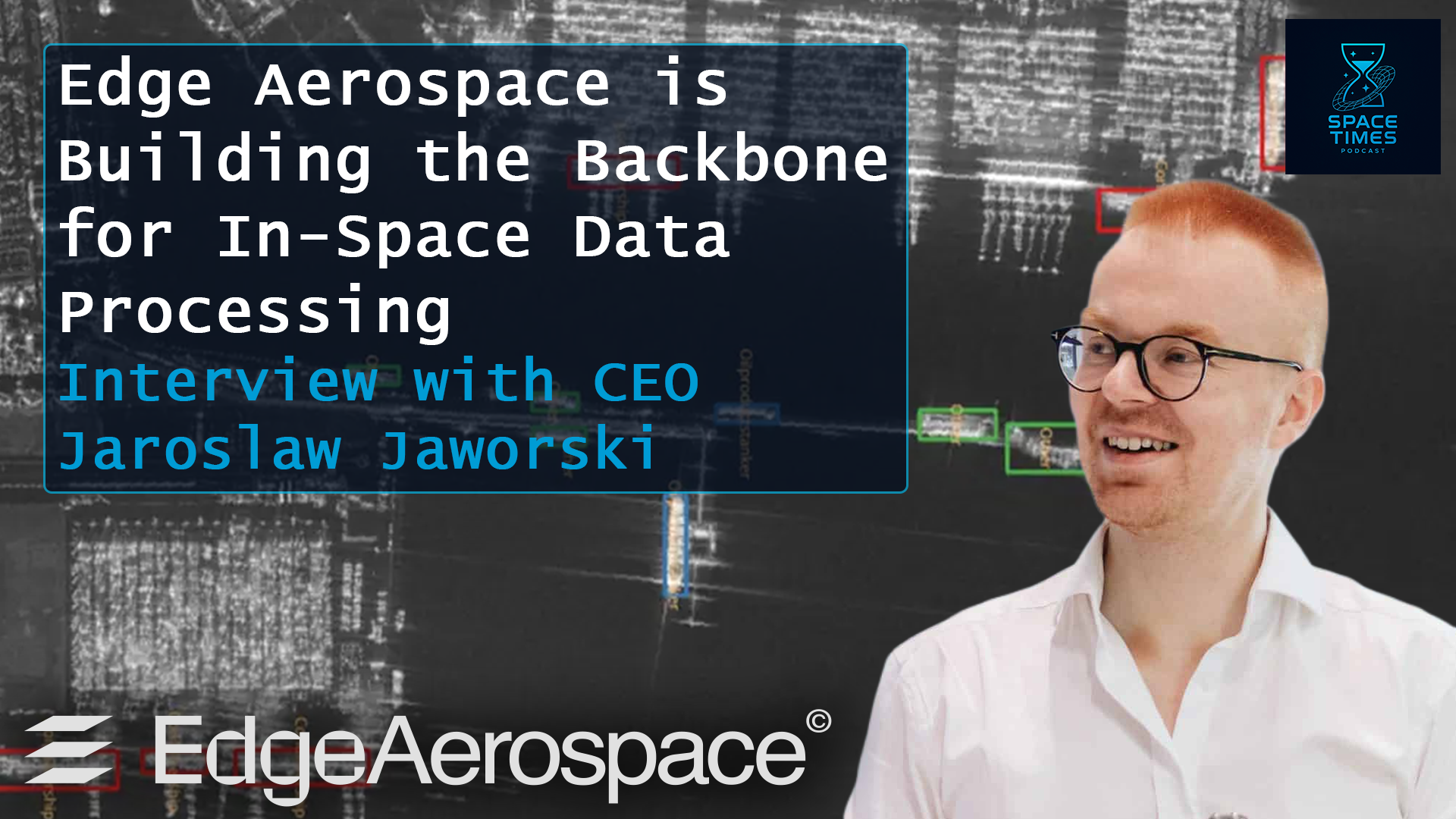
The conversation around orbital data centers is constant these days as the idea seems inevitable, but the challenges remain unsolved. A GPU needs to pack as many transistors into a small lightweight package as possible, but that exposes it to higher radiation damage risk from increased density of sensitive components, more power consumption, and subsequently higher temperatures. Most space companies are working on scaling up their satellites to handle the issues, but that doesn’t address the core problem of inefficiency in the compute. NVIDIA and Google have begun dipping their toes into space, but the difference in approaches highlights the variety of ways that chip manufacturers are approaching the problem. Both are adapting their existing technology for space, but the approach relies on redundancy and scaling back for low size weight and power (SWaP) and is endemic of the key issue: companies are designing around space, not for it. Edge Aerospace was formed in response to feeling that problem accutely, CEO Jaroslaw Jaworski (JJ) previously co-founded Made In Space, a pioneer of in-space manufacturing, where they “were building robotic subsystems, so a lot of sensors, a lot of actuators. It was amazing that we could find a computer for such a basic subsystem as computer to help us to have even basic machine learning in real time controlling. We paid literally millions for something that didn’t work. And when we started to work on the next big thing after we left Redwire, computing was very high on our candidate list for the next startup. And when we were working through the trade shows, we’re checking the industry stage, the lack of computing, and even more lack of onboard networking, was something that kept coming back.” And so Edge Aerospace was formed to redesign the compute system from the ground up, focused on efficiency of the systems needed to handle data, the lifeblood of any profitable space mission.
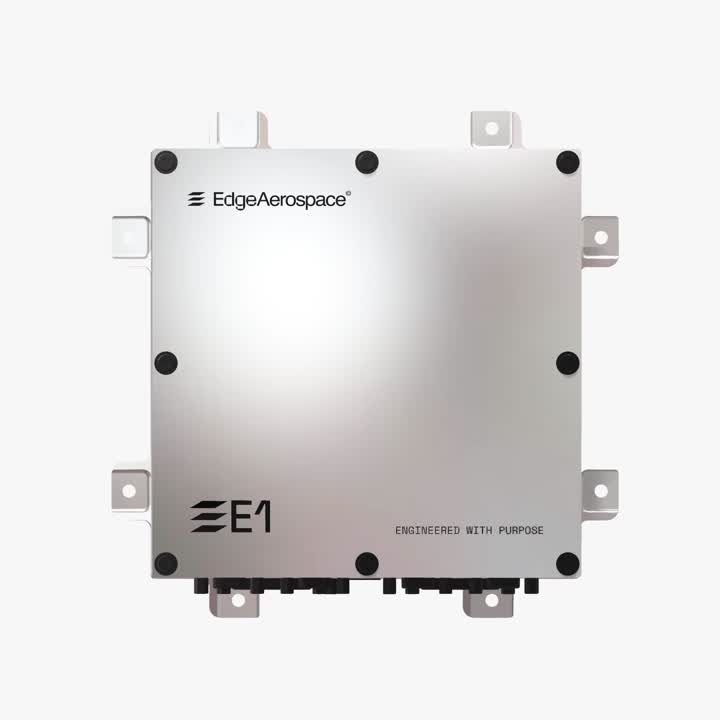
JJ explains their design ethos as “what’s called system on modules. So we are able to make everything smaller and also optimize for power consumption, size, and efficiency. And on the top of that, we have also our operational system. So that also is important part for, first of all, managing the computing resources, correcting the mistakes caused by radiations or by other reasons. And then if you have something that you design in house, which is both hardware and software, those two needs to go hand by hand if you would like to achieve the highest efficiency of the system.” This is an insightful approach because most companies with ambitions to build orbital data centers (ODC) acknowledge that the current demand is for edge computing, where more capable computers are attached to current satellite designs to provide faster insights from data collected by imagers, radios, and other sensors. While ODCs can be designed to scale to 100kw+ satellites that fill entire rockets, most satellites currently are sub 1kw and take dozens to populate a launch vehicle. SWaP is still the driving force for satellite designs as it still costs $3-7k per kilogram to get to orbit, which forces optimization in the size of all components including batteries needed for higher power and radiators needed for higher temperatures. That means launching a data center grade GPU will be overkill for most data volumes generated by mass constrained satellites, and will drive up the cost in power and thermal systems. Instead, Edge is developing computer and data networking components that are optimized to current satellite paradigms, minimizing mass, power consumption, and heat generation while still delivering enough compute capability to run advanced data processing onboard the spacecraft. By optimizing for SWaP, Edge’s compute system can be swapped in for existing off-the-shelf options with trivial increase to component and launch cost for the satellite, while paying for itself through its enhanced edge computing capabilities. JJ highlights this value due to the fact that “different types of sensors are more and more powerful, they generate a lot of data. The constellation operators, have a problem with dumping the data to the ground: the cost of communication. So you need to use more and more edge computing to actually at least preprocess the raw data and have some analytics done on board.” This new approach saves the operator money because they are able to reduce the volume of data by compressing raw data into the insight that’s most valuable to the end user, and therefore pay less to downlink it, and generate more value by being able to deliver it quicker.
As the number of satellites on orbit continues to accelerate, the amount of data processing on-orbit will continue to grow as well. And as non-terrestrial communications networks expand, more data from Earth will be sent up. One core thesis on this trend is that data will increasingly be processed in transit from point-to-point on Earth, and routed through satellites that can do this processing. The added benefit of building computers designed for space operations, and optimized for the smaller scale we see in current designs, is that it can be scaled up to meet larger volume demands. The fact that Edge’s first two products are a computer AND a data processing router indicates that they’re preparing for this inevitability. By building the chip and the backbone, they’re able to scale their units arbitrarily large. In doing so they can leverage the heritage they’re building now to provide reliable building blocks for larger systems. And by being able to capitalize on current demand, they can scale up production with revenue while bringing down costs for manufacturing to further drive up profit and grow the virtuous cycle. JJ highlights the early signs of this growth in “space situational awareness, mostly for defense to look around what’s happening around your satellite for both your own security reasons…there is a switch from ground sensors that are observing what’s happening around the sky to sensors that are onboard every satellite. And here, there is a lot of potential for our network switches to connect multiple cameras and also do the almost, like, full processing of the data for monitoring because you don’t need this on the ground.” This networking of multiple satellites is the first sign of the next step for edge computing, moving from more capable computers on every satellite, to handing off to other more capable satellites. By capturing the current networking needs through their contracts with space domain awareness companies, they’re able to practice the hybrid satellite architecture needed for when spacecraft capable of more compute are integrated into that network.

Edge Aerospace identified a problem that’s plagued the industry since its inception, and more importantly diagnosed the underlying condition. By creating computing systems optimized for SWaP that still constrains the industry, they’re building the foundational blocks for a current market need that will enable them to scale to the more aspirational goal of orbital data centers without carrying the tech debt of compute systems that worked around the challenges of space. The same problems are starting to show in other sectors of the industry such as lunar, and how the cost of moving data over such large distances back to Earth will be a problem. Furthermore, the radiation environment is even more unforgiving, giving Edge even more of an edge over other solutions that didn’t put in the work to address the problems head-on. If you’re working in space domain awareness, other data heavy sensing missions, or looking toward the future of ODCs and lunar exploration, then be sure to contact Edge Aerospace to solve all your data handling needs.
Watch the full interview on YouTube!




Leave a Reply