
Auria started out by combining specialized software companies, now they’re expanding their unified suite
Command, Control, and Communications are distinct functions in space operations that tend to get lumped together. They’re each critical, and dependent on each other; no communication, no commanding, no control. For that reason they’re often referenced collectively as C3; even though each has its own depth of capability that can easily justify separate systems, but the harmony is key. Since they’re different enough, the interface between them all can easily fall out of tune and result in a discordant suite of software. That’s the problem Auria formed to solve, uniting 4 companies that were specialists in each segment to create a unified experience that offers a seamless solution for the emerging demands of the space industry.
This fellowship of companies formed at a time when C3 was of growing importance: 2024 saw a doubling of satellites from 6,000 to 12,000. That acceleration of growth in the space industry signaled the compounding challenge of operating all those new spacecraft. While most of that growth was from SpaceX’s Starlink, it heralded broader growth, and was further spurned by expansion of the defense sector. The Proliferated Warfighter Space Architecture (PWSA) had been deploying for a year at that point, beginning the rollout of a new and complex form of missile command capabilities with satellites that could detect threats and relay instructions to ground assets. The first Victus Nox mission had demonstrated some of the most advanced control challenges for dynamic space missions that continues to push the envelope just within the past couple months. And Starshield was poised to rapidly expand the defense communications capabilities with the first operational rollout that same year. Across all these different fields, one thing was common, the government was increasingly leveraging commercial innovation to expedite the procurement and deployment of space assets. This is a trend that Auria was poised to capitalize on, and saw how the benefits could flow both ways, as Auria CTO Dave Hansen explained “so now the government has access to all those capabilities, right? And what we’ve noticed with the antenna providers is they seem to like that, because they may have time on their antenna that’s not being used…The government now has access to something they previously didn’t have. And now our antenna providers have access to a new customer they possibly didn’t.”
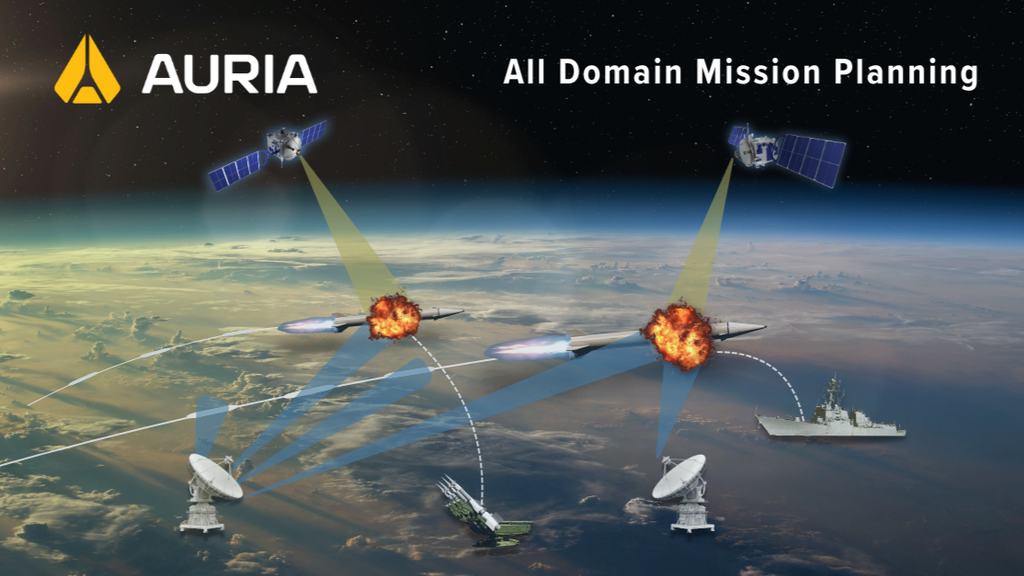
This trend of dual use has been a major factor this year with massive contracts going hand in hand with large private funding rounds. All that capital is providing companies with the ability to develop more advanced capabilities, and deploy more quickly, and results in a self-perpetuating cycle that continues to accelerate the growth of space. As space reaches such a scale, two major issues emerge: the complexity of operating so many different spacecraft, and the management of so many assets necessitating more automation. The numbers of satellites not only necessitate more automation, which Auria addresses with their HeliOS management suite, but also an increase in complexity due to the fact that more satellites means more combinations of unique mission profiles. Auria addresses that variation by providing their services to integrate software in a way that’s optimized for each use case, as Dave explains “we do have COTS products, and we do want you to buy them…but we also understand we’re not always the best product for the job. So when we look at these big integration jobs [we] take a look across the company and say, hey, do we have products to do it? Or are there better options out there for the end user, for the operator.” This foresight has proven critical as space assets have to adapt to increasingly complicated missions involving different spacecraft both friendly and adversarial as has been a major theme this year across defense and commercial space.
The scale challenge is the problem that’s more acutely felt in the commercial sector. Constellations are growing bigger whether it’s the 250 AST Bluebirds, 650 Eutelsat OneWebs, or 7,000 Amazon Leos; they all operate at numbers beyond what a human operations team can scale to. This has prompted a demand for automation that almost necessitates some level of AI. There’s already been significant adoption of edge processing that uses AI to gather inferences onboard satellites, but for AI that goes beyond just the payload, the rollout has been more cautious. There’s countless companies that are proposing AI for spacecraft management, but few have actually deployed on-orbit. Auria already has flight heritage for onboard automation, which sets them apart, and gives them a strong basis to expand their capabilities. Dave explains that they’ve already “started going down the path of predictive AI where you can use historical data to forecast outcomes, identify risk, predict equipment failures…decision and planning…select actions, plan out satellite context, allocate resources, things like that.” Such a set of tools alleviates a lot of the problems that satellite operators are currently experiencing, but also builds towards a more resilient and reliable space infrastructure.
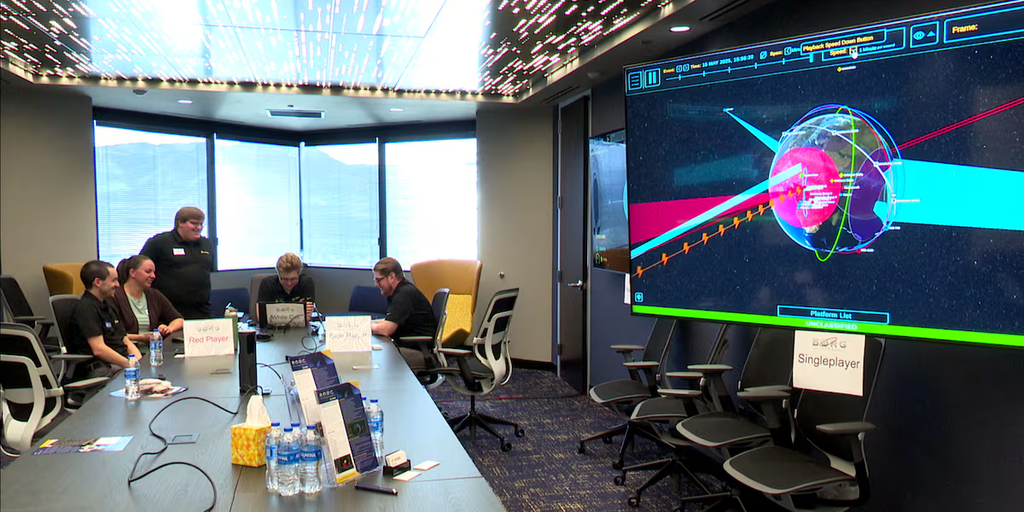
Such stability is key for what comes next. Right now, SpaceX is pushing to expand into the telecom provider layer, where their satellites will be interacting even more directly with the end user on Earth. The average person won’t be as understanding of the intricacies of orbital dynamics interrupting their call. All other direct-to-device providers will face this same challenge once they are more fully deployed, and having a solution that can ease the connection between earthlings and space will be even more critical. Dave emphasizes “Twenty something years ago, space was a very niche area…But now you’re seeing as you know, thousands of satellites are being launched a year…Space is being used by everybody. So the cool thing is we know a lot about space and how to manage those resources and how to manage working with space companies.” For now, their capability is extremely useful for customers such as the government who need to integrate their ground hardware with GPS and milsatcom reliably, but as we’ve seen with the growth of everything else related to space, this will feed into the commercial side over time.
Like Auria forming from multiple companies, the future of space is forming from multiple directions. Pulling all those different vectors together is a tough challenge, but one that Auria has over 20 years experience of tackling. They can leverage their flight heritage, and experience across a wide range of mission types, to build for the future. Leveraging AI and advanced technologies to integrate smoother, and operate faster. They’re “looking for companies to work with for effective partnerships where [they] can work together to align mission outcomes and…integrate the best available technology.” If you’re also looking to build the best possible future for space operations, then be sure to connect with Auria!
For the full interview with Auria CTO Dave Hansen, visit our YouTube!



Leave a Reply