
Lux Aeterna’s is funded to launch their reusable satellite platform allowing for fully recyclable and reusable missions with either 15 years of combined on orbit operation or 15 launch cycles, whichever comes first.
The next major reductions in cost for access to space are almost here! Access to space has always been gatekept by the sheer capital requirements to get there. Rapid and extensive advancements in launch technology – namely the development and implementation of reusable rockets – have contributed to bringing down the capital expense of space access by an order of magnitude. Further progress in this avenue will bring launch costs down even further, meaning that fully reusable rockets are responsible for reducing the total cost to space by somewhere in the neighborhood of 80-90%. Lux Aeterna, a satellite manufacturer and operator in Denver, Colorado, has been working diligently at bringing that same level of capital efficiency and savings to the space assets themselves. Space Times had the privilege of speaking with Brian Taylor, founder and CEO of Lux Aeterna, this week to discuss their Seed raise, the Delphi-1 mission, and their key objectives and milestones through 2027.
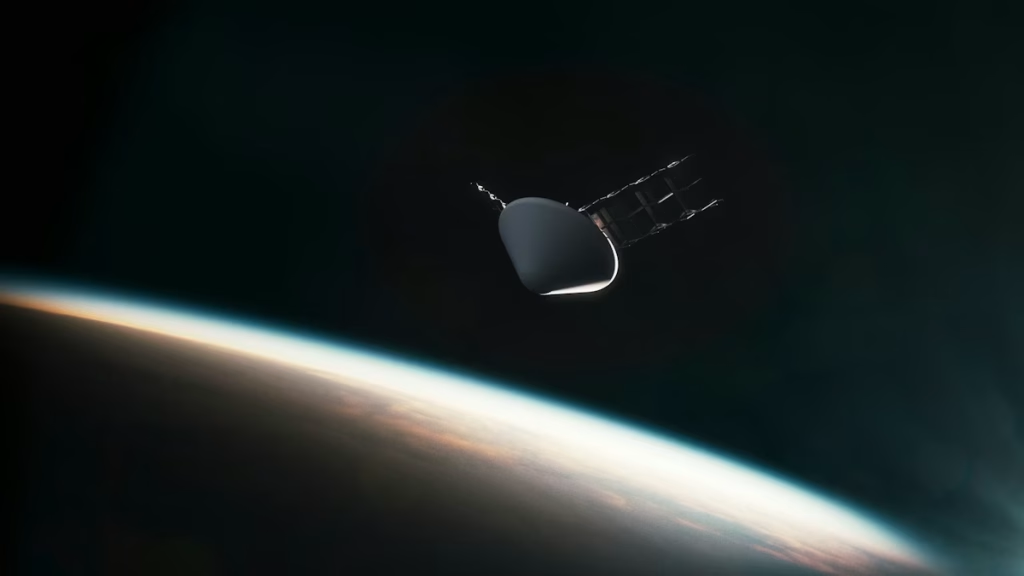
The Delphi-1 mission, set to launch in Q1 2027, is Lux Aeterna’s first vehicle. The vehicle will prove out their business model, demonstrate their orbital/re-entry technology, and provide clear signals to the space industry that a new paradigm for space flight is here. Hosting a bevy of different payloads, Delphi-1 is already overcommitted with multiple backup payloads wait-listed should a current rider slip or not be ready for Q1 ‘27 delivery. The novelty and unique design of Delphi-1 is its geometric design in which the central satellite bus/chassis serves as a heat shield for the entirety of the satellite. Lux Aeterna has, effectively, repurposed a reentry capsule on paper and built a satellite from the ground up designed around that architecture. Their vehicles bear the best heat shield technology available, and with deployable and retractable solar cells, their entire satellite design is able to fold into the heat shield’s protected pocket along with the hosted payload itself. Much in the same way that reusable rocket providers have reduced the cost of launch itself by 90%, Lux Aeterna is developing the hardware and technology necessary to allow for a similar saving profile on the cost of the actual satellite itself.
What does a recycled or reusable satellite mean for the industry? There are a wide variety of implications, hence the proclaimed ‘new paradigm’. To justify the immense cost of a satellite, operators have traditionally had to design for maximum lifetime, often leading to overdesigned vehicles. With the ability to share that cost across multiple missions, however, the accounting changes. Brian explains that this shift in constraints will “…allow people to design a mission that is one month or six months or 12 months or three years. So that is a whole new mission architecture class, that variability really opens up a lot of doors. So what people are going to do with it and where that focus is going to be and where the most demand is, we can’t answer. We just are really excited about opening up the market to those new architectures.” The magnitude of savings in those new architectures will have to wait on empirical data to be truly accurate, but assuming a 50% savings to start isn’t a bad baseline – it’s roughly the savings that refurbished phones and vehicles afford to consumers. Should Lux Aeterna be able to reuse all of the hardware and the payload on a particular mission and only need to replace the heat shield, we might expect a refurbishment cost closer to 10% the asset value than 50%. Regardless of what the total savings for refurbishment vs new construction wind up being directly, those savings are material and demonstrate a step change improvement in capital needs for space access.
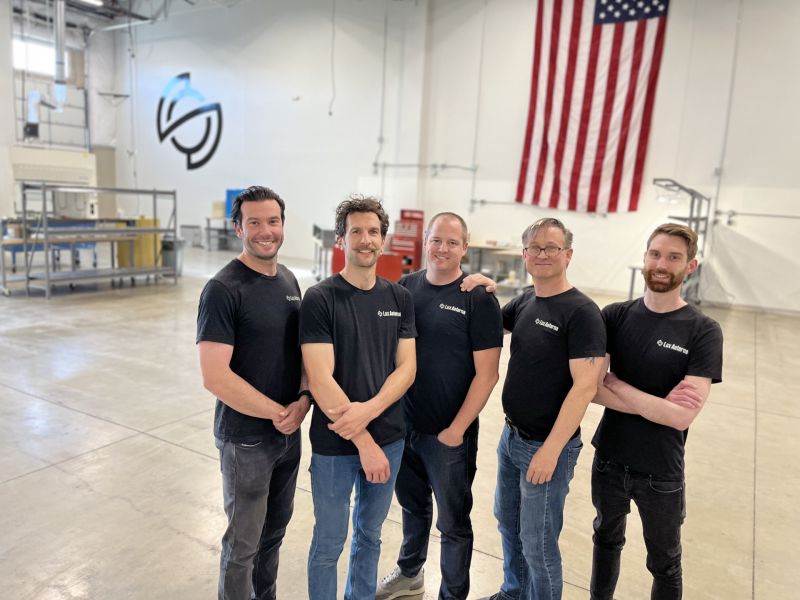
Additionally, Lux Aeterna’s re-entry capabilities allow for some fundamental changes to the actual missions themselves. Shorter mission cycles become financially feasible when a $5M optical payload can be returned safely and repaired, maintained, or upgraded before going back up. The ability to rapidly iterate and update an entire fleet of satellites at pace with the innovations of the payloads themselves rather than needing to wait for batch launches and projects represents a massive operational shift. This separation of bus and payload, Brian explains, lets them “…keep the satellite bus constant and reuse that. You’re really not missing out on a bunch of technology innovation by doing that. You’re just saving a whole bunch of money by not rebuilding the satellite every time, but you can now run one-year missions where you get the latest technology on the satellite payload” Orbital assets can now be considered recoverable and salvageable in a first for the commercial sector. The payload could be salvaged and liquidated to return capital to the satellite operators if returned liquidity is more pressing than payload capability. For example: an outdated constellation architecture valued at $33M needs to be updated with a new set of busses and payloads; there’s still roughly 30% of the constellation’s value on orbit in the form of payload hardware despite the payloads capabilities being made obsolete by other technology advances; that $10M of capital still on orbit can be recovered and salvaged as the payloads can be upgraded to market capability or sold for salvage; $10M of capital that has otherwise been unretrievable in any capacity.
The clear comparisons to the used and preowned automotive industry terrestrially indicate that, once normalized, the growth and development of a refurbished / reusable satellite and space vehicle market will not only serve as a net positive for the space industry, but will wind up outpacing the global satellite market directly. Lux Aeterna is leading the effort to drastically lower the cost of access to space by reducing the cost of space assets directly. Their effort will grow the space economy by enabling new mission types that haven’t been fiscally viable to date, and by allowing more customers to pursue said novel missions.
Their path to success isn’t an easy one as they will have to overcome the technical challenges of ensuring their heat shield and bus geometry are able to protect the satellite’s payload and subsystems upon re-entry, but their success will be worth the effort. Anyone excited to help Lux Aeterna solve these problems by joining Brian and the team should reach out to Lux Aeterna!
Check out the full interview on our YouTube channel to learn more about what Lux Aeterna is working on.



Leave a Reply